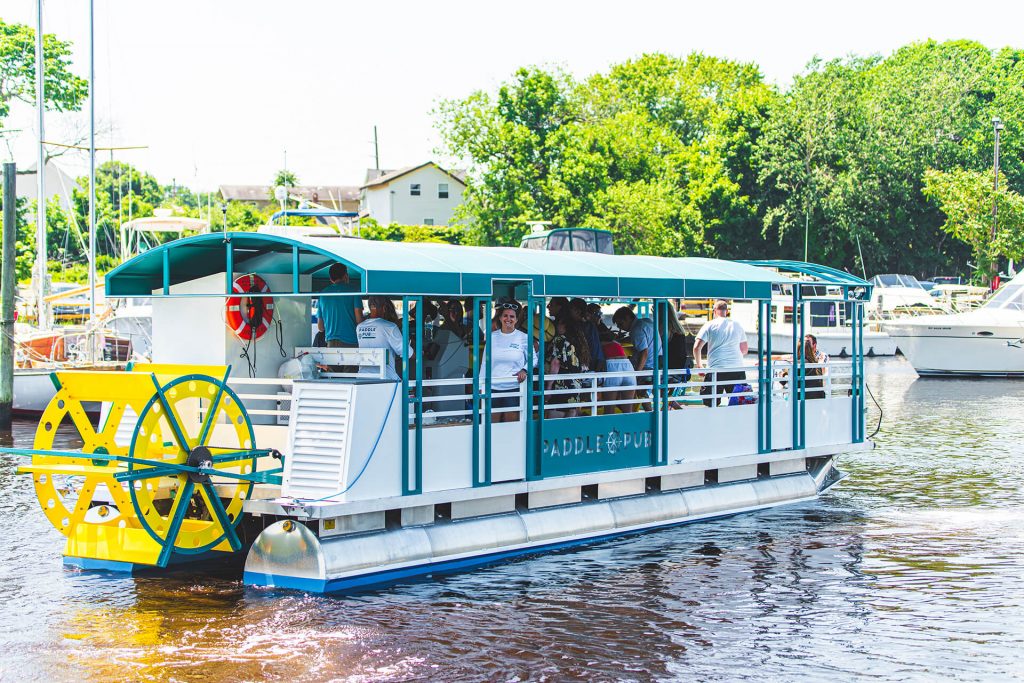
Walk along any popular waterfront district in America and you'll notice something that wasn't there five years ago — tiki boats. They're everywhere. Nashville. Tampa. San Diego. Austin. Chicago. What started as a novelty has turned into one of the most profitable niches in the marine entertainment industry, and operators who got in early are quietly making very good money.
The numbers tell a story that's hard to ignore. Tiki boat operations have seen revenue growth of 30–40% year over year in markets across the Southeast, Midwest, and Pacific Northwest. A single well-positioned tiki boat running 4–5 tours per day during peak season can generate $250,000 to $400,000 in annual revenue. That's not a projection from some optimistic business plan — those are real figures operators have shared with us.
What's Actually Driving the Tiki Boat Boom?
Let's be honest — it's not just because they look cool (though they do). The real driver is a fundamental shift in consumer spending. People, especially millennials and Gen Z, have made it abundantly clear: they'd rather spend money on experiences than things. A two-hour tiki boat cruise with friends hits every button — it's social, it's photo-worthy, it's outdoors, and it involves drinks. That's basically the entire Instagram economy condensed into one floating platform.
But the business fundamentals are what really make operators sit up and pay attention. Unlike a traditional restaurant or bar with massive overhead, lease negotiations, and 73 different permits, a tiki boat operation has a relatively lean cost structure. Your biggest expense is the boat itself. After that, it's insurance, fuel, a captain, maybe one or two crew members, and your dock fees. Compare that to a brick-and-mortar entertainment venue and the math becomes very attractive.

The Corporate and Events Market Is Exploding
Here's something that catches a lot of new operators off guard: corporate bookings. Companies are tired of the same team-building dinners and bowling outings. A private tiki boat charter? That's a Wednesday afternoon that people actually talk about. We've heard from operators who fill 40–60% of their weekday schedule with corporate events, team outings, and private parties. That turns what could be a seasonal, weekend-only business into something with real year-round potential (especially in warmer climates).
Bachelorette parties are another goldmine. If you're operating in a city with any kind of wedding tourism — Nashville, Charleston, Savannah, Scottsdale — you already know. These groups book months in advance and they're willing to pay premium rates for a private cruise. Some operators have told us bachelorette bookings alone account for 25% of their revenue.
What to Look for When Buying a Commercial Tiki Boat
Not all tiki boats are created equal, and this is where a lot of first-time buyers make expensive mistakes. A tiki boat that looks great in a brochure photo might be a maintenance nightmare or, worse, not meet Coast Guard requirements for your intended use. Here's what actually matters:
- USCG certification — If you're taking paying passengers, your vessel must meet Sub-Chapter T requirements. Full stop. Some manufacturers sell boats that look commercial but aren't certified. That's a liability disaster waiting to happen.
- Hull material — Aluminum hulls outlast fiberglass by decades in commercial use. They handle the constant boarding, docking, and occasional bump that comes with running 1,500+ trips per year. At TourCraft, we build exclusively with marine-grade aluminum for exactly this reason.
- Passenger capacity — More passengers per trip means more revenue per hour. But capacity has to be engineered correctly — it's not just about deck space. Weight distribution, stability, and safety all factor in. Our Tiki 32 carries up to 18 passengers while maintaining excellent stability.
- Customization — Your boat is your brand. The ability to customize the tiki bar layout, seating configuration, lighting, audio system, and overall aesthetic isn't a luxury — it's what separates a forgettable ride from one that generates five-star reviews and repeat bookings.
- Manufacturer support — What happens when something needs repair in the middle of peak season? Ask about parts availability, warranty terms, and whether the manufacturer has a service network. A boat sitting at the dock is a boat not making money.

Market Trends Heading Into 2026 and Beyond
Several trends are converging that make right now a particularly interesting time to enter the tiki boat market or expand an existing fleet:
First, municipalities are actively courting water-based entertainment as part of waterfront revitalization projects. Cities from Milwaukee to Fort Lauderdale are investing in dock infrastructure and creating favorable licensing environments for commercial boat operations. If your city is building a new riverwalk or marina district, that's your opening.
Second, the "sober curious" movement has actually been good for tiki boats. Sounds counterintuitive, right? But operators who've added non-alcoholic packages and wellness-themed cruises (sunset yoga on a tiki boat, anyone?) are tapping into an entirely new demographic. The boat is the experience — what people drink on it is secondary.
Third, social media continues to be the gift that keeps giving. A single viral TikTok of a birthday party on a tiki boat can generate more booking inquiries than a year's worth of traditional advertising. Smart operators are building their boats with the algorithm in mind — ring lights, Instagrammable corners, neon signs with the company name. The boat itself becomes the marketing.
Ready to explore tiki boat options for your market? TourCraft builds USCG-certified commercial tiki boats in multiple configurations. Contact our team to discuss your specific needs and get a custom quote.
Contact UsThe Bottom Line
The tiki boat market isn't just growing — it's maturing. Early operators proved the concept. Now the industry is entering its next phase, where serious operators with quality vessels, solid business plans, and great customer experience are pulling ahead. The window for getting into an underserved market is still open, but it won't stay that way forever.
If you've been researching commercial tiki boats, you probably already have a market in mind. The question isn't whether tiki boats work as a business — that's been proven. The question is whether you're going to move on it before your market gets saturated. In our experience, the operators who succeed aren't necessarily the ones with the biggest budgets. They're the ones who invest in a quality vessel, understand their local market, and actually pull the trigger.
TourCraft Team
Commercial Boat Manufacturer