
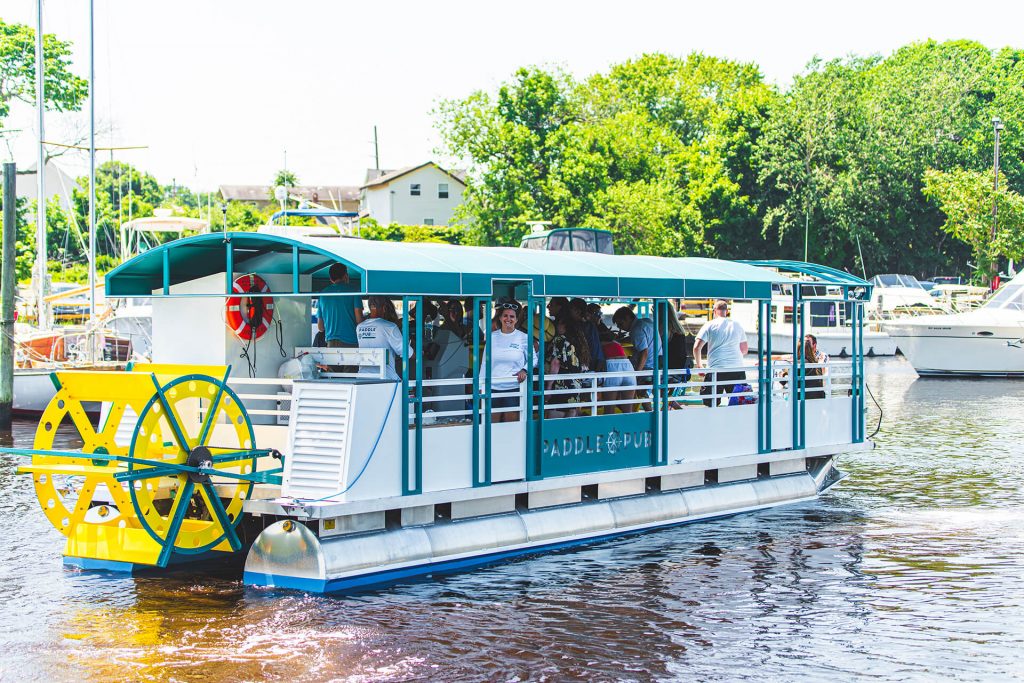
You've seen them on Instagram. You've maybe even ridden one. You've done the back-of-napkin math — "$50 per person, 16 people, 5 tours a day, that's..." — and now you're seriously considering it. Starting a party bike or tiki boat business.
Good. It's a real business with real revenue potential. But like any business, the difference between operators who thrive and operators who struggle comes down to preparation, execution, and making smart decisions with limited information. This guide covers the entire process from concept to launch — the stuff we've learned from helping hundreds of operators get started over the past decade.
Step 1: Validate Your Market (Before You Spend a Dollar)
This is the step everyone wants to skip, and it's the most important one. Not every city is the right market for a party bike or tiki boat, and figuring that out before you invest $50,000–$150,000 is worth a few weeks of research.
Start with the basics. Does your city have a walkable entertainment district (for party bikes) or accessible waterways (for tiki boats)? What's the tourism traffic like? Are there existing entertainment/activity businesses that thrive — tour companies, bar crawls, escape rooms? If people in your city are already spending money on group experiences, that's a strong signal.
Next, check for competitors. If someone's already running a party bike or tiki boat in your market, that's actually good news and bad news. Good news: the market is proven. Bad news: you'll need to differentiate. If there are no competitors, you'll be educating the market — which takes longer but gives you first-mover advantage.
Finally, and this is critical: call your city's transportation department, city clerk, or business licensing office. Ask specifically about commercial multi-passenger vehicles (for bikes) or commercial vessel permits (for boats). Some cities welcome these businesses. Others have effectively banned them through restrictive ordinances. Find out before you go further.
Step 2: Build Your Business Plan
You don't need a 50-page MBA thesis. You need a working document that answers the core questions:
- Revenue model — What will you charge per person or per private booking? What's your expected occupancy rate? How many tours per day, per season? Be conservative in your estimates. Assume 60% occupancy in year one, not 90%.
- Startup costs — Vessel or bike purchase, insurance deposit, permits and licenses, marketing launch, operating reserves (3–6 months of expenses). For a single party bike operation, plan for $60,000–$100,000. For a tiki boat, $100,000–$200,000 depending on size and configuration.
- Operating costs — Monthly insurance, fuel (for boats), dock fees or parking permits, staff wages, marketing, maintenance reserve. Know your breakeven point before you launch.
- Funding — Cash, SBA loan, equipment financing, investor? Most manufacturers (including TourCraft) work with financing partners who specialize in commercial recreation equipment. Don't assume you need all cash upfront.
- Legal structure — LLC is the standard recommendation. Talk to a business attorney and an accountant before you launch. Maritime and transportation businesses have specific liability considerations.
Step 3: Permits, Licenses, and Insurance
This is where a lot of first-time entrepreneurs get frustrated, but it's non-negotiable. The specific requirements vary by city and state, but here's the general framework:
For Party Bikes:
- Business license and EIN
- Commercial vehicle permit or license (city-specific)
- Approved operating route (many cities require a defined route)
- Liquor license OR BYOB permit (varies by municipality)
- Commercial general liability insurance ($1M–$2M minimum)
- Workers' compensation insurance
For Tiki Boats and Cycle Boats:
- Business license and EIN
- USCG documentation for the vessel
- Sub-Chapter T inspection and certification (for vessels carrying paying passengers)
- Licensed captain (USCG Master credential with appropriate tonnage endorsement)
- Marine commercial liability insurance
- Dock or marina lease agreement
- State waterway permits (varies)
The USCG Sub-Chapter T requirement for commercial boats is the big one. This is federal law — any vessel carrying paying passengers must meet specific safety standards, carry required safety equipment, and be inspected annually. This is non-negotiable, and it's one reason why buying from a manufacturer who builds to Sub-T specs from day one (like TourCraft) saves you enormous headaches. Trying to retrofit a recreational boat to meet commercial standards is expensive and often impossible.

Step 4: Choose Your Vessel or Bike
This is the fun part. And also the part where making a smart, informed decision saves you the most money long-term. Here's our honest advice:
Buy commercial-grade from day one. We understand the temptation to save money with a cheaper, recreation-grade option. But commercial operations are brutal on equipment. You're running 300+ trips per season with different riders, different conditions, and constant loading and unloading. Equipment that's "fine for recreational use" will break down under commercial duty cycles. The repair costs, downtime, and cancelled bookings will eat whatever you saved on the purchase price, usually within the first year.
Consider starting with one unit and expanding. The most successful operators we know started with a single bike or boat, proved the concept in their market, built up cash reserves and a customer base, and then added units. You learn more from running one unit for a season than from any amount of planning.
Step 5: Marketing and Launch
The good news: party bikes and tiki boats are inherently viral products. People take photos. They post on social media. They tag their friends. Your product is its own marketing engine. But you still need to prime the pump, especially for your launch.
- Build a website with online booking — This is non-negotiable. If people can't book in two clicks at 11 PM on a Tuesday, you're losing sales. Use a booking platform like FareHarbor, Peek, or Bookeo. Integrate it into your website. Make it frictionless.
- Claim and optimize your Google Business profile — This is where a huge percentage of your organic leads will come from. "Party bike [your city]" or "tiki boat tours [your city]" are high-intent searches. Be there when people look.
- Instagram and TikTok first — These are visual businesses. Your social strategy should be built around user-generated content. Encourage riders to post, create a branded hashtag, and repost the best content. Some operators offer a small discount for social media posts and it pays for itself 100x over.
- Soft launch with influencers and media — Invite local bloggers, event planners, hotel concierges, and media to free rides before your public launch. These people become referral channels. A single hotel concierge who recommends your tiki boat to guests can drive thousands of dollars in bookings per month.
- Partner with bars, restaurants, and hotels — Create referral relationships. Display flyers. Offer commissions. The businesses along your route or near your dock have customers who are your customers.
Common Mistakes to Avoid
After working with hundreds of operators over the years, we've seen patterns in what goes wrong. Here are the mistakes that cost people the most money and stress:
- Skipping market research — "There's no tiki boat in my city, therefore there's demand" is not research. Maybe there's no tiki boat because the waterway is too shallow, the permits are impossible, or the tourist traffic isn't there. Validate before investing.
- Underestimating insurance costs — Marine commercial insurance and commercial vehicle insurance are not cheap. Budget 8–12% of your projected revenue for insurance. Get quotes before finalizing your business plan, not after.
- Ignoring seasonality — Unless you're in South Florida or Southern California, you're going to have an off-season. Your business plan needs to account for 3–5 months of little or no revenue. That means building cash reserves during peak season and managing costs during the off-season.
- Buying the cheapest vessel — This always costs more in the long run. Always. A quality commercial vessel from a reputable manufacturer is an investment that generates revenue for 15–20 years. A bargain boat is a liability that generates repair bills.
- Neglecting the customer experience — The ride is not the whole product. It's the greeting when people arrive. It's the quality of the guide. It's the cleanliness of the vessel. It's the follow-up email asking for a review. The operators with 4.9-star ratings aren't doing anything magical — they're just consistent about the details.
Ready to take the first step? TourCraft has helped hundreds of operators launch successful party bike and tiki boat businesses. Our team can walk you through vessel options, connect you with financing partners, and share insights specific to your market. Contact us for a no-pressure conversation.
Contact UsThe Timeline: Concept to Launch
Realistically, plan for 4–8 months from "I'm going to do this" to your first paying customers. Here's a rough timeline:
- Months 1–2: Market research, business plan, permit research, initial financing conversations
- Months 2–3: Vessel or bike order, insurance quotes, legal setup (LLC, contracts)
- Months 3–5: Build/delivery period, dock or parking secured, captain hired (for boats), booking system set up
- Months 5–6: Website live, marketing launch, soft launch events, initial bookings
- Month 6+: Public launch, iterate on operations based on real feedback
The operators who succeed treat this like a real business launch — because that's exactly what it is. The ones who struggle are the ones who wing it. Put in the preparation work upfront, make informed decisions about your market and your equipment, and you'll be in great shape when you open for bookings.
TourCraft Team
Commercial Boat Manufacturer

